Best SEO Strategy for Small Businesses
Best SEO Strategy for Small Businesses often struggle to compete with large brands online. However, smart search engine optimization can help smaller companies rank higher, attract targeted customers, and grow organically without spending huge advertising budgets.
The best SEO strategy for small businesses focuses on building trust, improving website quality, targeting the right keywords, and creating useful content that solves customer problems.
Today, SEO is not only about ranking on Google. It is about improving user experience, increasing credibility, and generating long-term business growth.
Whether you run a local store, an online shop, or a service-based company, this guide explains practical SEO strategies that deliver real results.
Why SEO Matters for Small Businesses
Search engine optimization helps businesses appear in Google search results when customers search for products or services online.
Benefits of SEO for small businesses include:
- Increased organic traffic
- Higher Google rankings
- More qualified leads
- Better brand visibility
- Long-term marketing growth
- Improved trust and authority
- Higher conversion rates
Unlike paid advertising, SEO continues delivering traffic over time. A properly optimized website can generate leads for years.
For professional SEO solutions, explore our
Services

Understand Your Target Audience
Before starting SEO, businesses must understand their audience.
Ask these questions:
- What problems do customers face?
- Which keywords do they search?
- What type of content do they prefer?
- Are they searching locally or globally?
- Which devices do they use?
Understanding user intent helps create better content and target the right search terms.
For example:
- Informational keywords: “How to improve SEO”
- Commercial keywords: “Best SEO agency”
- Transactional keywords: “Buy SEO services online”
Keyword intent is extremely important for ranking success.
Perform Smart Keyword Research
Keyword research is the foundation of every SEO campaign.
Focus on:
- Low competition keywords
- Long-tail keywords
- Local SEO keywords
- Buyer intent keywords
Examples related to this topic:
- Best SEO strategy for small businesses
- Small business SEO tips
- Local SEO services
- SEO marketing for startups
- Affordable SEO solutions
- SEO guide for beginners
Use keywords naturally throughout:
- Title
- Introduction
- Headings
- Meta description
- URL
- Image alt text
- Conclusion
Avoid keyword stuffing because Google penalizes over-optimization.

Optimize Website Structure
A clean website structure improves both user experience and search engine crawling.
Important optimization steps include:
- Fast website loading speed
- Mobile-friendly design
- Secure HTTPS connection
- Simple navigation menus
- SEO-friendly URLs
- Proper internal linking
- Clean coding structure
Google prioritizes websites that provide excellent user experiences.
You can also explore our latest SEO insights here:
Blogs
Create High-Quality Content
Content remains one of the strongest ranking factors.
Your content should be:
- Helpful
- Original
- Readable
- Informative
- Updated regularly
- Optimized for search intent
Small businesses should focus on:
- Blog posts
- Service pages
- Guides
- Tutorials
- FAQs
- Case studies
Google rewards websites that demonstrate expertise, authority, and trustworthiness.
Helpful content also increases engagement and reduces bounce rate.
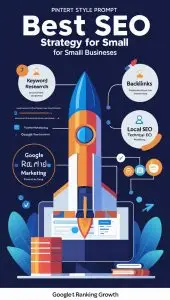
Focus on Local SEO
Local SEO is extremely important for small businesses targeting nearby customers.
Optimize your business for local searches by:
- Creating a Google Business Profile
- Adding location-based keywords
- Collecting customer reviews
- Building local citations
- Embedding Google Maps
- Adding contact information clearly
Examples of local keywords:
- SEO agency in Karachi
- Best digital marketing company near me
- Local SEO expert Pakistan
Local optimization improves visibility in Google Maps and local search results.
Improve On-Page SEO
On-page SEO helps search engines understand your content.
Important on-page SEO elements include:
Title Tags
Use your primary keyword naturally in the title.
Example:
Best SEO Strategy for Small Businesses in 2026
Meta Descriptions
Write compelling meta descriptions with keywords and strong calls to action.
Header Tags
Use structured headings properly:
- H1 for main title
- H2 for main section
- H3 for subtopics
Image Optimization
Compress images and add descriptive alt text.
Internal Linking
Internal links help users and search engines navigate your website.
Example internal resources:
Build Quality Backlinks
Backlinks remain a major ranking factor.
However, quality matters more than quantity.
Good backlink sources include:
- Guest posts
- Business directories
- Industry blogs
- News websites
- Niche partnerships
Avoid spammy backlinks because they can damage rankings.
Small businesses should focus on building natural and relevant backlinks gradually.
You can also learn from leading online businesses like:
Optimize for Mobile Users
Most users now browse websites on smartphones.
Google uses mobile-first indexing, meaning mobile experience directly affects rankings.
Improve mobile SEO by:
- Using responsive design
- Compressing images
- Reducing popups
- Improving page speed
- Simplifying navigation
A slow mobile website can significantly reduce conversions and rankings.
Improve Website Speed
Page speed is a confirmed Google ranking factor.
Slow websites increase bounce rates and reduce user satisfaction.
Ways to improve speed:
- Use lightweight themes
- Enable caching
- Optimize images
- Minimize scripts
- Use quality hosting
- Reduce unnecessary plugins
Fast websites improve both SEO and conversions.
Use Technical SEO Best Practices
Technical SEO helps search engines crawl and index your website correctly.
Important technical SEO elements:
- XML sitemap
- Robots.txt optimization
- Canonical tags
- Structured data
- Broken link fixing
- Crawl error monitoring
Regular technical audits help maintain SEO health.
Publish Content Consistently
Consistency is essential in SEO.
Publishing fresh content regularly helps:
- Increase indexed pages
- Target more keywords
- Improve authority
- Generate traffic
- Build audience trust
A small business blog can become a powerful source of organic traffic over time.
Aim to publish:
- Weekly blog posts
- Industry updates
- Tutorials
- Product guides
- SEO case studies
Optimize for User Experience
Google prioritizes websites that users enjoy.
Improve user experience through:
- Clear layouts
- Easy navigation
- Readable fonts
- Helpful content
- Fast loading pages
- Strong call-to-actions
Good UX increases engagement metrics that support better rankings.
Use Social Media for SEO Growth
Social media indirectly supports SEO by increasing visibility and traffic.
Build your brand presence on:
- YouTube
Connect with our social platforms:
Sharing blog posts and website content can improve audience reach and brand awareness.
Track SEO Performance
SEO success requires continuous monitoring.
Important metrics include:
- Organic traffic
- Keyword rankings
- Bounce rate
- Conversion rate
- Backlink growth
- Click-through rate
Use tools like:
- Google Analytics
- Google Search Console
- Ahrefs
- SEMrush
Data helps improve strategies and identify new opportunities.
Avoid Common SEO Mistakes
Many small businesses make SEO errors that hurt rankings.
Common mistakes include:
- Keyword stuffing
- Duplicate content
- Slow websites
- Poor mobile design
- Buying spam backlinks
- Ignoring technical SEO
- Publishing thin content
Focus on long-term quality instead of shortcuts.
Future of SEO for Small Businesses
SEO continues evolving with artificial intelligence and changing search behavior.
Future trends include:
- Voice search optimization
- AI-generated search summaries
- User intent optimization
- Video SEO
- Local search expansion
- Experience-focused content
Businesses that adapt early will gain competitive advantages.
Conclusion
The best SEO strategy for small businesses combines high-quality content, keyword research, technical optimization, local SEO, and user experience improvements.
SEO is not an overnight process. It requires patience, consistency, and continuous optimization. However, businesses that invest in SEO build long-term online visibility and sustainable traffic growth.
Instead of chasing quick ranking tricks, focus on creating value for users and maintaining website quality.
With the right strategy, even small businesses can compete successfully in search results and attract highly targeted customers.
For professional SEO support and digital marketing services, visit:
Boosters Services
FAQ
What is the best SEO strategy for small businesses?
The best strategy includes keyword research, content creation, local SEO, technical optimization, and backlink building.
How long does SEO take to show results?
SEO usually takes 3 to 6 months to show noticeable improvements depending on competition and website quality.
Is SEO better than paid advertising?
SEO provides long-term organic traffic, while paid ads stop generating traffic when the budget ends. Both can work together effectively.
Why is local SEO important?
Local SEO helps nearby customers find your business in Google search and Google Maps results.
Can small businesses do SEO themselves?
Yes, small businesses can start SEO independently, but professional guidance often improves results faster.
Author Bio
Boosters Marketing Agency
Boosters Marketing Agency is a professional digital marketing and SEO company focused on helping businesses grow online through advanced SEO strategies, content marketing, website optimization, and branding solutions. The agency specializes in creating Google-friendly, AdSense-safe, and high-converting digital experiences for startups, eCommerce stores, and local businesses.
Website:
Boosters Marketing Agency