
Why Your Rankings Didn’t Drop But Traffic Did (Explained Simply)
By Boosters Marketing Agency
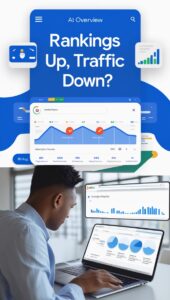
You checked your rankings.
They look fine.
But when you open Google Analytics, your traffic graph tells a different story.
Sound familiar?
If your rankings didn’t drop but your website traffic did, you’re not alone. Thousands of businesses are facing the same confusion after Google’s latest AI updates.
The truth is: search behavior has changed, and so has Google.
In this simple guide, Boosters explains exactly why your rankings stayed stable but your traffic dropped — and what you can do about it.
The Short Answer: Google Changed How Users Get Answers
Google is no longer just a list of links.
Today, users see:
- AI Overviews
- Featured snippets
- Knowledge panels
- Zero-click answers
Many searches are answered without users clicking any website.
So even if you’re ranking:
- Your link might be pushed lower
- Your answer might be summarized by AI
- Users may never reach your page
Your ranking is fine.
Your visibility is not.
The Rise of Zero-Click Searches
Zero-click searches happen when users get their answer directly on Google.
Examples:
- “What is SEO?”
- “How to lose weight fast”
- “Best skincare routine”
AI Overviews now answer these instantly.
Result?
✔ Your page ranks
❌ Your traffic drops
This is one of the biggest reasons rankings and traffic are no longer connected.
AI Overviews Are Stealing Clicks
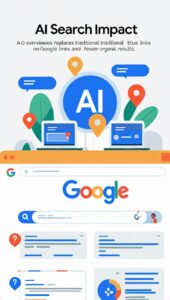
Google’s AI Overviews summarize content from top-ranking pages and show it at the top.
Users:
- Read the answer
- Trust the AI
- Move on
They never scroll.
Your content is still ranking — but AI is using it instead of sending traffic.
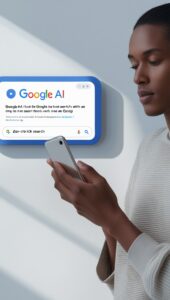
Your Link Is Still Ranking — But It’s Lower on the Screen
Search results today include:
- Ads
- AI Overviews
- Featured snippets
- People Also Ask
- Videos
Organic links are now pushed much lower.
So even if you’re ranking #1 organically, your link might appear halfway down the page.
That means fewer clicks.
Mobile Search Made It Worse
On mobile, AI Overviews can take up the entire screen.
Users may not even see organic results unless they scroll.
That’s why traffic drops feel sudden — especially for mobile users.
User Behavior Has Changed
Today’s users:
- Want instant answers
- Trust AI summaries
- Don’t browse 10 links anymore
They scan, read, and leave.
This behavior shift is permanent.
The Real Problem: You Optimized for Old SEO
Traditional SEO focused on:
- Ranking position
- Keyword density
- Backlinks
Modern SEO focuses on:
- AI visibility
- Content extraction
- Brand trust
- Search intent
If your strategy hasn’t changed, traffic naturally drops.
How to Fix the Problem (Simple & Practical)
Now the important part: what you can do about it.
Here’s how Boosters helps clients recover visibility and clicks.
1. Optimize for AI Overviews
Structure your content so AI can feature you.
Do this:
- Answer the main question in the first 2–3 lines
- Use bullet points
- Add FAQs
- Keep paragraphs short
When AI quotes your content, users still search for your brand.
2. Build Brand Searches
When users search your brand name, AI can’t replace you.
That’s why branding matters more than ever.
Strengthen your presence across platforms:
- Facebook: https://www.facebook.com/boosterofficials
- Instagram: https://www.instagram.com/boostersofficials/
Brand recognition = direct traffic.
3. Build Topical Authority
One article is not enough anymore.
Create content clusters and link them together.
Our SEO services at Boosters focus heavily on authority building:
👉 https://boostersmarketingagency.com/product-category/services/
You can also explore proven strategies in our blog hub:
👉 https://boostersmarketingagency.com/blog/
4. Refresh Old Content
Update your best-performing pages:
- Add new examples
- Improve clarity
- Update statistics
- Add FAQs
Fresh content gets more AI visibility.
5. Match User Intent Perfectly
If users want a quick answer, don’t write a long story.
If they want a guide, don’t write a short definition.
Intent matching is now a ranking factor.
Learn From Websites That Adapted Well
Some websites adapted perfectly to AI search.
For example:
- Fashionholic uses clean layouts and simple product descriptions that AI understands easily:
👉 https://fashionholic.pk/ - Organic Herb Store benefits from clear categories and informative product pages:
👉 https://organicherbstore.com/product-category/products/
Their structure helps both users and AI.
Final Thoughts from Boosters
If your rankings didn’t drop but traffic did, nothing is broken.
Google just changed how it delivers answers.
The solution is not panic.
The solution is adaptation.
When you optimize for AI visibility, build authority, and strengthen your brand, traffic doesn’t just recover — it grows.
And that’s the future of SEO.

❓ FAQ Section (For SEO & Rich Results)
Why did my traffic drop even though my rankings are still high?
Because Google AI Overviews and zero-click searches now answer many queries directly, reducing the need for users to click websites.
Is SEO dead after AI updates?
No. SEO has evolved. Now it focuses more on AI visibility, topical authority, and brand trust rather than just rankings.
How can I recover traffic after AI updates?
Optimize for AI Overviews, improve content structure, build topical authority, refresh old content, and strengthen your brand presence.
Do rankings still matter?
Yes, but visibility matters more. Ranking without visibility means fewer clicks.


Leave a Reply