
How to Optimize Content for Google AI Overviews (Step-by-Step Guide)
Optimize content for Google AI Overviews are changing how people discover content. Instead of scrolling through ten blue links, users now see AI-generated summaries at the top of search results. If your content isn’t optimized for AI Overviews, you’re missing massive visibility.
The good news?
You don’t need complicated tricks. You just need the right structure, clarity, and strategy.
This step-by-step guide shows you exactly how to optimize your content for Google AI Overviews in 2026.
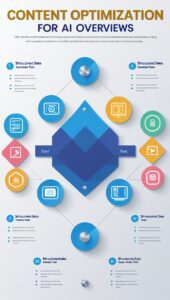
⭐ What Are Google AI Overviews?
Google AI Overviews (formerly part of SGE) are AI-powered summaries that appear above traditional search results. Google pulls information from multiple trusted pages and presents a clear, fast answer.
Your goal is simple:
👉 Make your content easy for AI to understand, trust, and summarize.
⭐ Why Optimizing for AI Overviews Matters in 2026
AI Overviews often appear before organic rankings. That means:
✔ Higher visibility without ranking #1
✔ Strong brand exposure (even with fewer clicks)
✔ Authority positioning in your niche
✔ Better long-term SEO performance
Optimizing for AI Overviews is no longer optional — it’s essential.
⭐ Step-by-Step: How to Optimize Content for Google AI Overviews
✅ Step 1: Answer the Main Question Immediately
AI Overviews love direct answers.
Best practice:
-
Start sections with a 2–3 sentence summary
-
Avoid long intros before the answer
-
Be clear and factual
Example:
What are Google AI Overviews?
Google AI Overviews are AI-generated summaries that appear at the top of search results to answer user queries quickly using trusted sources.
✅ Step 2: Use Question-Based Headings (H2 & H3)
Google extracts answers from clear questions.
Use headings like:
-
How does Google AI Overviews work?
-
Why are AI Overviews important for SEO?
-
How do you optimize content for AI search?
This makes it easier for AI to match your content with user intent.
✅ Step 3: Structure Content for AI (Very Important)
AI prefers organized content.
Use:
-
Bullet points
-
Numbered steps
-
Short paragraphs
-
Simple language
Avoid:
-
Long walls of text
-
Over-optimized keyword stuffing
-
Complicated sentences
Clear structure = higher AI visibility.
✅ Step 4: Build Topical Authority With Internal Links
Google trusts websites that cover a topic deeply.
Link your content naturally to related pages, such as:
👉 Services: https://boostersmarketingagency.com/product-category/services/
👉 Blogs: https://boostersmarketingagency.com/blog/
This tells Google your site is an authority — not a one-page wonder.
✅ Step 5: Strengthen EEAT Signals
Google AI Overviews prioritize trust.
Improve EEAT by:
-
Writing from real experience
-
Using accurate, updated information
-
Adding brand and author credibility
-
Keeping content fresh
Also, connect your brand across platforms:
👉 Facebook: https://www.facebook.com/boosterofficials
👉 Instagram: https://www.instagram.com/boostersofficials/
These brand signals support AI trust.

✅ Step 6: Add Supporting Examples & References
AI Overviews pull content that shows real-world relevance.
Examples:
-
E-commerce stores with structured data
-
Clear product categories
-
Helpful descriptions
Good references include:
-
Fashion products → https://fashionholic.pk/
-
Organic product categories → https://organicherbstore.com/product-category/products/
These sites use clean structure, which AI prefers.
✅ Step 7: Optimize for Search Intent (Not Just Keywords)
AI doesn’t rank keywords — it ranks answers.
Make sure your content matches:
-
Informational intent (what, why)
-
How-to intent (steps, guides)
-
Comparison intent (pros & cons)
Write like you’re helping a real person — not an algorithm.
✅ Step 8: Keep Content Fresh and Updated
AI Overviews favor recent and relevant information.
Best practice:
-
Update articles every 30–60 days
-
Add new examples
-
Improve clarity
-
Refresh internal links
This keeps your content AI-friendly long-term.
⭐ Common Mistakes to Avoid
❌ Writing long introductions
❌ Ignoring structure
❌ Overusing keywords unnaturally
❌ No internal linking
❌ Outdated information
Simple, helpful content always wins.

⭐ Final Thoughts: AI Overviews Are an Opportunity
Google AI Overviews don’t kill SEO — they reward better content.
If you:
✔ Answer questions clearly
✔ Structure content for AI
✔ Build topical authority
✔ Strengthen trust signals
You can dominate AI Overviews and future-proof your SEO in 2026 and beyond.


Leave a Reply